Showing posts with label free grace theology. Show all posts

Saturday, July 02, 2011

How Much We Need Need (-final-)

'Need' is a Significant Component to the Gospel Message
[Previous Post: How Much We Need Need (part 6)]

The Essence of the Content in Saving Faith

Why did the woman at the well believe Jesus was the Christ? John 4:28-29,
The woman then left her waterpot, went her way into the city, and said to the men, “Come, see a Man who told me all things that I ever did. Could this be the Christ?” Then they went out of the city and came to Him.
She believed that Jesus was the Christ because He told her all things that she ever did, because she first saw the demonstration of His gift. In His gospel, Jesus had provided the "Way" for her to see the "essence" of the message - the Holy Spirit, which was a gift being freely offered to her.

Notice that she see Him demonstrate power in predicting her husbands, first, and then she believes in Jesus as the Christ. Which part of her testimony was the selling point to the townsmen? The noteworthy part, John 4:39,
And many of the Samaritans of that city believed in Him because of the word of the woman who testified, “He told me all that I ever did.”
God-with-us is something to be excited about.  All of the signs in John work in a similar fashion. When the Holy Spirit demonstrates Himself, people believe in Jesus. This is simple, child-like faith.

The scriptural content of the message for the unsaved becomes saving when it highlights one central truth: Man needs God. 1 Cor. 2:1-5,
And I, brethren, when I came to you, did not come with excellence of speech or of wisdom declaring to you the testimony of God. For I determined not to know anything among you except Jesus Christ and Him crucified. I was with you in weakness, in fear, and in much trembling. And my speech and my preaching were not with persuasive words of human wisdom, but in demonstration of the Spirit and of power, that your faith should not be in the wisdom of men but in the power of God.
How was it accounted to Abraham our father as righteousness? Romans 4:17, 20-22
...Him whom [Abraham] believed — God, who gives life to the dead and calls those things which do not exist as though they did.... He did not waver at the promise of God through unbelief, but was strengthened in faith, giving glory to God, and being fully convinced that what He had promised He was also able to perform. And therefore “it was accounted to him for righteousness.” 
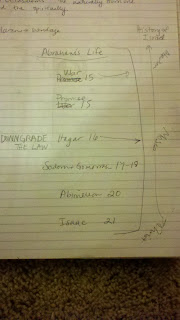
God is able to perform.  "Do you believe this" (John 11:27-29)?   Abraham's content to be believed was the power of God.  He was fully convinced. Is it because he was open-minded to the facts and was passively persuaded? Is it because he blindly hoped it to be true? No; Abraham had seen for himself what God could do through him by conquering Canaanite kings so triumphantly. At the time of war in chapter 14 of Genesis, Abraham had become the administrative head of blessing in the land that God had promised in chapter 12, and Melchizedek, the priest of God, had come out to testify of God's presence with Abraham. Then after this, in chapter 15 he hears God's promise and is justified by believing it.  Likewise in the Gospel of John, after hearing the most famous verse (John 3:16) we hear that those who already "do the truth" believe upon the Son receiving forgiveness "because" their deeds have been done in God (John 3:21). Those who seek God's essence (the gift of the Holy Spirit) have already recognized God's power in their pre-faith journey (Romans 1:20).

Defending the Babes, the Carnal

Free grace people admire Abraham who was "fully persuaded."  Where does assurance of salvation really come from? Does it come from a promise alone gospel, a crystal clear, concise location in scripture to be used like a fool-proof formula? In limitation, a verse brings assurance of salvation. How about a systematic proof that Jesus is the Christ and was raised from the dead from the Old Testament all through the gospel accounts, like Paul preached in Acts 13 to Galatia? In limitation, a biblical synthesis gospel brings assurance of salvation. As much as Free Grace people are protecting saints and those coming to faith from a lifetime of doubt over their own justification with God, it is quite commendable.

Assurance of salvation comes from intimacy with the Holy Spirit, not just from a promise verse (John 11:25-27) or a persuasive case of things of first importance according to the scriptures (1 Cor. 15:1-4). Consider Job. He was called blameless by God Himself in the beginning. Job spent the majority of the book arguing with his counselors that indeed he once had been blameless, even though now he was spiritually miserable. God was patient with Job's arguing over what happened in the past - and Job, in his grief, doubted it was worthwhile to be "blameless" as he once was. Only when Job realigned himself into fellowship with God once more was Job assured, and onlookers persuaded. The only way to prove our salvation is to identify who we are in light of who God is, every day.

I wonder if our thoughts on the gospel resembles Job's argument with his first three counselors.

JOB: "No, really; I was blameless."
ELIPHAZ: "Job, there's no way you and God were fine with one another; I mean look at you."
JOB: "But I was! I just can't show you. What's wrong with this picture? I am beginning to doubt there was profit in knowing God."
ELIPHAZ:  "I say you never did.  Here, let me tell you a more theologically correct understanding of God's acceptance."

Might it be God's manner to withhold assurance in someone's soul in particular times and seasons? After a saint's justification he will subsequently be tested and may disregard spiritual things. Free Grace people say either a concise verse or a biblical synthesis is the only "correct" means by which a person can re-establish assurance of salvation. By thinking this way, I wonder if we are no longer in step with God's discipline upon His child. A FG person hears this and mis-diagnoses it; that if they did not receive the exact content of the message that saved them, they must not have been saved in the first place. This is no more a solution than the Calvinists who wrestle with the plight of carnal Christianity, calling for upfront obedience in the proclamation of God's gift of salvation, distorting and distracting again from the true area of concern, which is? Non-persevering sanctification.

"Do not quench the Spirit," it says in 1 Thess. 5:19. This means to suppress or extinguish the presence of God in our hearts. Is it possible that a saint once would hear the Spirit cry from within him, "Abba, Father," at one point in his life as he sought reigning as a son with Christ, but would lose this comforting testimony that he is a child of God through carnality? Galatians 4:6-7,
And because you are sons, God has sent forth the Spirit of His Son into your hearts, crying out, “Abba, Father!” Therefore you are no longer a slave but a son, and if a son, then an heir of God through Christ.
Are these carnal guys the guys we've been defending with FG soteriology? When did this happen that the inward testimony of the Spirit within our hearts wasn't convincing enough that we had to go find a formula removed of His powerful, chastening Presence, to gain assurance? Though it might become quenched, Romans 8:15 tells us that when we were justified each of us received this inward testimony loud and clear,
For you did not receive the spirit of bondage again to fear, but you received the Spirit of adoption by whom we cry out, “Abba, Father.”
Searching the Scriptures

How did Paul defend justification with God for the carnal Christian? He reminded them quickly of how they had known the power of God as opposed to the persuasion of men in a divisive manner, all the way through 1 Corinthians chapters one through four. Jesus had the same battle of "persuasive words vs. the power and demonstration of the Spirit of God," with the Pharisees. They knew so much about God that they were lawyers. John 5:39-40,
You search the Scriptures, for in them you think you have eternal life; and these are they which testify of Me. But you are not willing to come to Me that you may have life.
Searching the scriptures is spiritually fruitless till a person is willing to come to Jesus and receive life ("In Him was life, and the life was the light of men" John 1:4). This is what the revelation (the "Word") is teaching us to appropriate. It is amazing the Pharisees really thought they could make a case of knowing how to work God when they worked over passages. Jesus dealt with them in a disapproving manner. It only condemned themselves before God and men. This kind of free grace discussion is, as it was with Job as well, a carbon copy of that argument the Pharisees had with Jesus in the letter of the law over what needed to be believed regarding the work and person, at that time, of YHWH.

There are already many people who are looking for more from Free Grace. They want to be offered a life-giving gospel to every kind of man who suffers in darkness, not only the variety of darkness of needing a correct chapter-verse address to assuage doubt over a former event of justification with God.

The biblical synthesis gospel (beginning with 1 Cor 15:1-4 and utilizing several other passages) can be an obstacle to assurance, but it was never meant to work that way. This content of saving faith is a gospel where assurance will never be achieved as it requires the unsaved to produce concrete knowledge of abstracts with its long list of "needs to be believed." As with the Pharisees, the use of the Word somehow is twisted; scriptures of any kind of content should not not rob assurance. If used properly scripture always enhances assurance of salvation. 1 Thess. 1:5,
For our gospel did not come to you in word only, but also in power, and in the Holy Spirit and in much assurance, as you know what kind of men we were among you for your sake.
The Word should harmoniously build on our sense that we can become/have in fact been saved by the amazing grace and truth of our Lord. If scripture does not bring a believer into harmony with God, it is because an evangelist and his listener is imbalanced, having some excellence in doctrine but an immaturity in the experiential knowledge of the breadth and depth of the love of God. It would have been better if they had heard the Samaritan woman's content of saving faith in place of a scripture-intense one; "Come, see a man who told me everything I ever did!"

"He Never Fails to Give Life"

"Suffice it to say, however, that Jesus never fails anyone who trusts Him for eternal salvation" [1].

The brilliance of the "Desert Island Scenario"[1] is that after the Holy Spirit demonstrates the power of God, the unsaved person will be fully convinced that God is trustworthy in His testimony no matter how short the scripture is concerning the gift of the Holy Spirit.

However, there are two mis-uses that arise with thinking like this. The first mis-use is why should anyone trust Him for everlasting salvation if they aren't inclined to desire it or understand it or even have eyes to see, unlike Abraham coming fresh off the battlefield? No one doubts the veracity of Jesus to give life. We doubt the people who have confused looks on their faces as they nod their head in politeness. No one is going to believe it unless they have been told they ought to seek it and probably already know it.

The second mis-use is that false religious people will agree with you. "Yes, I understand that Jesus gives eternal life to those who believe," or they say, "Yes, I believe that Jesus died for my sins on the cross and was resurrected," but who knows what they truly filter that to mean. For the false religions, they have not understood what it means to place their faith in an orthodox demonstration of the Spirit and of power (1 Cor 2:4). There is no protection against polytheism and other versions of "I believe" that are something less than the attention-grabbing thrust of a robust conservative evangelical gospel. Teaching the biblical doctrine of the antichrists and testing the spirits is helpful to distinguish things for the evangelist, but not for those being evangelized (see part III of "The Spirit of Antichrist: Decoupling Jesus from the Christ" by Zane C. Hodges).

Every content of saving faith seizes its relevance by making a case for our son-ship opportunity and the need for the Holy Spirit to achieve it.  Without it, the biblical synthesis evangelists will never know for sure if a lost person has personally grasped the significance in a fifteen-minute download of biblical data.  Even a promise-only presentation cannot explain the relevance of eternal life without also preaching son-ship [2].

People are not coming to Christ to increase license to sin! And they never will! I have been caught in this confusion regarding the gospel; perhaps you too? Can you imagine a humble, lost sinner who dislikes his own sin being told that Christ's salvation is a ticket to moral freedom (i.e. unconditional forgiveness)? This is the weak point in both a promise-only or a synthesis gospel. No wonder we are afraid to tell those who are much worse - those who pursue a life of debauchery - the gospel. They laugh at it and say, "that sounds good to me! You're telling me I can do whatever I want?!? Seriously, go away, why should Christ even die for sins then." They must believe God is good and that He would not tempt anyone. This is a gospel of light, not darkness. Son-ship makes "the promise of eternal life" and "Christ died for our sins according to the scriptures" two gospels of light! Presenting "the gift of God" as the Holy Spirit is what is missing.

What an interesting assumption that lost people care more about eternal life than their present one. Unless I am suddenly trapped under a car or hanging off a cliff, the afterlife is not what I think about all day long, as an unbeliever or even as a believer for several years starting off in the faith. I'm thinking about my next appointment, next vacation, next meal. It is usually those who have known Christ and the doctrine of eternal rewards that become interested in the afterlife - when they have a "beatitude promise" that it will be good and satisfying in spite of the lack of realized redemption in this one.

Eternal life is not just about salvation after we're dead! The unsaved desire the Holy Spirit for all sorts of things. The Holy Spirit is needed for obedience. He is needed for freedom from condemnation. He is needed for sonship and inheritance with God. He is needed for comfort and counsel. He is needed for the satisfaction of the daily spiritual needs of the soul. He is needed for intimacy with God. This is the reason why "eternal life" is described as qualitative such as John 17:3 or as for the rich young ruler why it was a possession to be gained through obedience.

Gospel essentials attain their usefulness when a person comes to Jesus ("the scriptures testify of Me" John 5:39) for the Holy Spirit. And what are they believing in when they hear the words of whichever Free Grace gospel is used? Take a look once more: what is the "bullseye" COSF according to this passage? 1 Cor 2:4-5,
And my speech and my preaching were not with persuasive words of human wisdom, but in demonstration of the Spirit and of power, that your faith should not be in the wisdom of men but in the power of God.
Indeed I believe it is saying it is critical we NOT be persuasive when sharing the gospel so that people will notice the Holy Spirit in the message, the presence and power of God, the essence they have been longing to believe was true, and receive Him Himself.  The Word of God is a Spiritual avenue (the "Way") to see straight through to the Spirit of God who has always been not far from each one of us (Acts 17:27).

This is what the woman at the well placed her faith in. She already knew where the well was, and where to draw water - not an issue. She wanted her own fountain of water so that she would not thirst nor keep traveling to draw it out. She heard of this source of power all for herself, all for the taking - exactly what Abraham heard in Genesis 12. They are not believing upon only the words of a promise... but the Presence within them.

The Duluthian Biblical synthesis proponents point out Paul's preaching in Acts 13 to the Galatians in their series of articles on the content of the gospel. In Acts 17, Paul preached to the Thessalonians "as was his custom" after so many evangelistic efforts recorded in Acts (Acts 17:3).   Paul had a custom for the gospel presentation -- in the synagogues. He tailored the good news of Jesus to the tradition of those who already had the scriptures: "This Jesus whom I preach to you is the Christ.” But that's not all his gospel shared.  According to this one "custom" of Paul, both the Galatian and the Thessalonian churches knew the power of God when they heard the message as recorded for us in 1 Thess. 1:5,
For our gospel did not come to you in word only, but also in power, and in the Holy Spirit and in much assurance, as you know what kind of men we were among you for your sake.
The Book of Galatians confirms that same gospel demonstration of the Holy Spirit, they having "received" the Spirit and having "begun" in the Spirit, with miracles (Gal. 3:2-3, 5). It is the essence of God both Jews and Gentiles lived without, being held captive to the futility and bondage to the elements of this world, all alike under sin. When they see the demonstration of the Spirit with power, they will "know" God [is] -with-us. They will believe Jesus is the Son of God because His testimony is accompanied by the spiritual essence of God affecting their soul and their life.  How can we lack assurance of salvation if God Himself, shows up?  Isn't it a "no-brainer" - and human persuasion is not needed here?

Have people shared their testimony with you, saying, "The reason why I follow the Bible is because everything it says came true for me personally." This is an Abrahamic sort of justification, more dynamic than the common description of a "passive persuasion." This is the kind of believer who knows God has come near and has all sorts of assurance as a byproduct. This is what Jacob's well really meant to a Samaritan woman, who knew the impossibility of Jacob finding Rachel or Abraham's servant finding Rebekah, or a strange Man who knew her intimate life, apart from the miraculous power of God for the purpose of glory, honor and immortality (Rom 2:7). And the power of God was the Samaritan woman's gospel to the city "Come, see a man who told me everything I ever did" - and certainly this COSF was enough for the city.  She was fully convinced in the power of God, and the gospel went forth for His glory.

Biblical Synthesis Mis-Uses

Perhaps there are answers that I have not read, but I do not know of an explanation from a synthesis gospel proponent why the content of Paul's message changes in Acts 17 and in Acts 14:14-17 with a primarily Gentile audience. Paul went to the Jews, foremostly, until Acts 17/18. Of course he would engender faith in Jesus according to the Old Testament when he was in the synagogues, where a majority of Jews and a minority of God-fearing Gentiles were steeped in the tradition of the scriptures. This is the gospel presented to the Galatian church, but it is by no means the only way of demonstrating the presence of the Holy Spirit in a way that helps the lost believe upon Jesus.  Presentation of scripture either waxes or wanes depending on the falling of the Spirit on the unsaved.  Acts 10:34-35,
Then Peter opened his mouth and said: “In truth I perceive that God shows no partiality. But in every nation whoever fears Him and works righteousness is accepted by Him." While Peter was still speaking these words, the Holy Spirit fell upon all those who heard the word.
Exactly how does an evangelist get the notion that until his formed checklist of the gospel is completely spelled out and quizzed upon his listeners, he can keep at bay the Holy Spirit falling on those whom God is justifying? We should not call as common that which has been made clean. When the Holy Spirit falls, we take our most ultimate cues from that - or else ("...who was I that I could withstand God?" Peter asked concerning Cornelius in Acts 11:17). Pharisees were more concerned about code than hearts being right before God. As a result they were failures at ecclesiology. They had no idea how their religiosity caused them to separate themselves from believers who they had become one with in the people of God. Their theologies choked the life out of "love from a pure heart, from a good conscience, and from sincere faith," which is the end-goal of the commandments.

The promise-only gospel not only identified theological legalism outside its borders, it instituted such. This theological legalism postulates that one truth in scripture is saving and others are not. It fairly has noticed that people become justified by faith in Jesus before understanding many basics of theology, however this awareness has become a misplaced mission to pare down truth into a single passage, one precise formula for salvation. Those who select 1 Cor. 15 as "the gospel" have followed in that thinking and are just as rigid, but it makes even less sense.  The synthesis camp offers truth.  The promise-only camp offers life.  Unless God shows up while preaching either gospel, preaching the Holy Spirit as the heart of these gospels, it's only a fight over decaying leftovers.

Promise-Only Mis-Uses

Perhaps there is a reason I do not yet understand, but I do not know why three times at the last GES conference I listened to presenters say that the offer of "eternal life" is nowhere to be found in the Book of Acts. They are trying to fathom the reason why. It does not yet make sense to me, because the promise-only content of saving faith is right there in Acts chapter one, but with an alternate term, the "Holy Spirit." Acts 1:4-8,
And being assembled together with them, He commanded them not to depart from Jerusalem, but to wait for the Promise of the Father, “which,” He said, “you have heard from Me; for John truly baptized with water, but you shall be baptized with the Holy Spirit not many days from now.” Therefore, when they had come together, they asked Him, saying, “Lord, will You at this time restore the kingdom to Israel?” And He said to them, “It is not for you to know times or seasons which the Father has put in His own authority. But you shall receive power when the Holy Spirit has come upon you; and you shall be witnesses to Me in Jerusalem, and in all Judea and Samaria, and to the end of the earth.”
Why is this passage only referring to unique phenomena in the origination of the Church? Abraham was promised "In you all the families of the earth shall be blessed" (Gen 12:3), and he was promised to inherit the land, as sons of God, which is exactly the difference from Judaism the Galatian church was failing to appropriate. Galatians 3:5-9,
Therefore He who supplies the Spirit to you and works miracles among you, does He do it by the works of the law, or by the hearing of faith? — just as Abraham “believed God, and it was accounted to him for righteousness.” Therefore know that only those who are of faith are sons of Abraham. And the Scripture, foreseeing that God would justify the Gentiles by faith, preached the gospel to Abraham beforehand, saying, “In you all the nations shall be blessed.” So then those who are of faith are blessed with believing Abraham.
Nothing too "Pentecostal" about that; it's sturdy old-fashioned blessing from God. We can believe in this one and the same promise for ourselves and the world. Miracles are our future. If God is restoring everything in the world and everything concerning our lives, we have endless fodder for expecting a miracle according to the hope set forth in the gospel - even if it is deferred hope for the age of resurrection. One day, God will wipe every tear from our eye; why can't we encourage the unsaved to believe "God is able" in any aspect of their life, whatever they are focused on today?  Abraham received a mix of fulfilled and deferred promises and such faith blesses God. Do we believe anymore in the power of God?

Give Them Spiritual Life

As you preach the gospel, your underlying orientation as evangelist is to have them receive the gift of the Holy Spirit. Trust the Spirit to point Himself out for the sake of making the lost person jealous and thirsty when you preach scripture. What is the demonstration of the Holy Spirit? Each one of us were given spiritual gifts according to the measure of Christ. These gifts are involuntary super-blessings in "the gift" of eternal life.

Let me share a story. There was this person I wanted to share the gospel with, so before I began I said to her genuinely, "I am completely certain [and I was] that God wants to do something for you, to show you that He is real and that He loves you. Do you believe in God?" Then I proceeded to review the gospel essentials and said, "But maybe no one has ever asked you if you personally believe the promise of God, that Jesus died for your sins and was raised with power and wants to give you a gift of Spiritual life." Then I reviewed with her current need she had just confided. Her spouse had not been living at home for several months because of legal trouble. She wanted it to stop, and we prayed for God to help. The next day, the charges against him were dropped! He was able to return to his family.

The Abide-With-God Gospel

"Assurance is the essence of saving faith." Do you ever wonder why when people first get saved they are excited about God even though they know nothing... and then a few months afterward they hear something challenging and begin to think they had not really been saved at all, and begin a quest to obtain it from formulas? Because they had believed, and then lost, the avenue (the Way) to obtain assurance.  Help them retrace their steps desiring that son-ship like Job's final counselor.

When a promise-only person preaches the promise of eternal life by faith, they are really telling the unsaved "abide with God through faith." When a biblical-synthesis gospel person preaches Jesus died for sins and was raised again, portraying Christ crucified on the cross, they portray a God who has done everything necessary so that we may approach God; they also are telling the unsaved "abide with God through faith." When someone is first saved, they are ALWAYS in a state of abiding with Jesus by faith - not just justified. Obviously, there is no fellowship barrier between God and man when the Holy Spirit regenerates and comes in to dwell with a cleansed sinner; therefore they are also abiding!

We fight over the scraps of assurance through scriptural formulas; meanwhile the abiding believer is feasting on it.

God is so gracious to us in Jesus Christ! If we have the privilege of evangelizing pre-sons of God, acknowledge them as such! With the proper disposition of an unsaved man, the "desert island scenario" would be sufficient.  Luke 11:11-13
"If a son asks for bread from any father among you, will he give him a stone? Or if he asks for a fish, will he give him a serpent instead of a fish? Or if he asks for an egg, will he offer him a scorpion? If you then, being evil, know how to give good gifts to your children, how much more will your heavenly Father give the Holy Spirit to those who ask Him!”
When lacking a proper disposition in the unsaved, or with the religious, preach the full testimony of Jesus Christ's person and work, that they might understand their need for God, the opportunity for son-ship, and seek His gift.


You heard of the Life of Jesus.
You heard of the Truth of Jesus.
Their essence is in the Way of Jesus!


[1]  Zane C. Hodges, How to Lead People to Christ, Part 1: Our Invitation to Respond. JOTGES, 2001.

[2]  Zane C. Hodges, How to Lead People to Christ, Part 2: Our Invitation to Respond. JOTGES, 2001.  (Excerpted from section "VI: Inviting People to Believe"):
"Hopefully, Ralph says that he does. If he says he doesn’t, I will ask him, "What seems to still puzzle you, Ralph?"


At this point, experience suggests that I will often get a question like this: "Do you mean that if I believe in Jesus for eternal life, that I can go out and do anything I want and still go to heaven?"


I am always pleased to hear this question, because it signals to me that the person is getting the idea that this is a gift and that it is not withdrawn if we behave badly.


My usual way of responding to the question is that being born again is like being born into a family. After that, we are always members of that family, even if we are scoundrels. But if we have good parents, they are not going to let us run wild. They will discipline and correct us and do their best to get us on the right path. Then I point out that, after we get eternal life, God is our heavenly Father and He is the best Parent we could imagine. He will not let us run wild. He will spank us, if need be, and may even take our physical lives away. But Jesus will never cast us out of God’s family."


How Much We Need Need (part 5)
How Much We Need Need (part 4)
How Much We Need Need (part 3)
How Much We Need Need (part 2)
How Much We Need Need (part 1)
How Much We Need Need (introduction)


Friday, May 06, 2011

How Much We Need Need (part 6)

'Need' is a Significant Component to the Gospel Message
[Previous Post: How Much We Need Need (part 5)]

The Revealing of the Sons of God

From John 4 they say, "whosoever wants Living Water."  They mean, "whosoever wants the Holy Spirit." What sort of person wants the Holy Spirit?  How about a Son?  John 3:19-21,
And this is the condemnation, that the light has come into the world, and men loved darkness rather than light, because their deeds were evil. For everyone practicing evil hates the light and does not come to the light, lest his deeds should be exposed. But he who does the truth comes to the light, that his deeds may be clearly seen, that they have been done in God.
Monergists use this passage to prove Calvinist logic. Instead of proving the depravity of man, it actually proves the doctrine of Romans 1:20 - all men are without excuse even before hearing of Christ.  Paul preached in Acts 14:17,
Nevertheless He did not leave Himself without witness, in that He did good, gave us rain from heaven and fruitful seasons, filling our hearts with food and gladness.
Acts 17:26-30 is slightly longer on this gospel essential.
And He has made from one blood every nation of men to dwell on all the face of the earth, and has determined their preappointed times and the boundaries of their dwellings, so that they should seek the Lord, in the hope that they might grope for Him and find Him, though He is not far from each one of us; for in Him we live and move and have our being, as also some of your own poets have said, ‘For we are also His offspring.’ Therefore, since we are the offspring of God, we ought not to think that the Divine Nature is like gold or silver or stone, something shaped by art and man’s devising. Truly, these times of ignorance God overlooked, but now commands all men everywhere to repent...
Imagine Reformed evangelists affirming the Athenians for the scant portion of light they had received. Would they call them "God's offspring," or expect them to know it's about time to repent, or tell them to reach out to God with ease?  For every soul of man there is opportunity for immortality, glory, honor and peace, and it is given to those who work what is good, to the Jew first and also to the Greek (Rom. 2:10) - potentially including the Athenians.

The Depravity in a Man of the World

Depravity comes from without: "The whole world is under the sway of the wicked one" (1 John 5:19).  Depravity comes from within: the 'mere human (1 Cor. 3:3)' nature is full of sin (Rom. 3:10-18). Whether one is a Jew or a pagan, all are under sin (Romans 3:9) apart from the leading of the Spirit. Who escapes depravity, and when?  Galatians 4:1-7,
Now I say that the heir, as long as he is a child, does not differ at all from a slave, though he is master of all, but is under guardians and stewards until the time appointed by the father. Even so we, when we were children, were in bondage under the elements of the world. But when the fullness of the time had come, God sent forth His Son, born of a woman, born under the law, to redeem those who were under the law, that we might receive the adoption as sons.
And because you are sons, God has sent forth the Spirit of His Son into your hearts, crying out, “Abba, Father!” Therefore you are no longer a slave but a son, and if a son, then an heir of God through Christ.
Sons are heirs and heirs are sons.  "He who overcomes shall inherit all things, and I will be his God and he shall be my son" (Rev. 21:7).  Who are the inheriting sons of God?  Galatians 3:26-29 says,
For you are all sons of God through faith in Christ Jesus. For as many of you as were baptized into Christ have put on Christ. There is neither Jew nor Greek, there is neither slave nor free, there is neither male nor female; for you are all one in Christ Jesus. And if you are Christ’s, then you are Abraham’s seed, and heirs according to the promise.
Seeds first, heirs also; if you are dissolved according to the promise.  "According" is defined as "a preposition denoting motion or diffusion from the higher to the lower." Not all believers in Christ are heirs of the Kingdom of God, however all believers will enter the Kingdom of God. Only sons inherit, those conformed after the promised Spirit.

Romans teaches son-ship as conditional as well. 8:14 deliniates,
For as many as are led by the Spirit of God, these are the sons of God.
All believers who receive Jesus by faith are immediately positioned as sons of God to inherit, but the ones who put it into practice are sons indeed and one day will be publicly revealed as such by God (Rom. 8:17-19).  Sons who need God's discipline are called "children" in the NT epistles.  Children are believers (seed) who are in Israel or in the Church.  It is not a designation of salvation, but performance.  They are not mature enough yet to put into practice the Way of the Spirit which achieves the work of God in their life.  Only "sons" amongst the children know how to successfully manage God's house like Christ did (Heb. 1-3).  In an audience of only Christ-followers (abiding disciples), Jesus gave His wisdom away.  John 15:15,
No longer do I call you servants, for a servant does not know what his master is doing; but I have called you friends, for all things that I heard from My Father I have made known to you.
He Led Them By The Hand out of Egypt

Children need a babysitter.  There was something missing with the old covenant, for which reason the second was sought (Heb. 8:7-12).  They did not truly understand righteousness with the ten commandments.  The law's ministry was to illustrate their bondage.  Jesus said, "And a slave does not abide in the house forever, but a son abides forever. Therefore if the Son makes you free, you shall be free indeed." Sons of the Kingdom are grown to maturity in God.  They have the capacity to set others free because they have the mind of Christ within.  With the Spirit they, along with the angels (Heb. 1:14), minister to both slaves (unsaved) and children (saved but foolish) that they might also become sons.  I've heard it said that Kingdom preparations are absent in the gospel written for evangelism (John), but freedom from Satan is the reason Jesus was manifested (1 John 3:8). Luke 4:18,
The Spirit of the LORD is upon Me,
Because He has anointed Me
To preach the gospel to the poor;
He has sent Me to heal the brokenhearted,
To proclaim liberty to the captives
And recovery of sight to the blind,
To set at liberty those who are oppressed
Sons from Seeds

"A child does not differ at all from a slave."  Unlike the slave, a child has the possibility to escape the guardians and stewards of the law, and escape the elements of bondage and futility in this world.  But being called a child is not flattery; he delays and dallies.  He chooses to follow after the flesh.  How does a believer look who follows after the flesh?  Does he not look like the unbelievers of this world?  And that is what Paul means.  Surprisingly, then, Paul tells his doubts of a second birth in the life of the Galatian people.  Gal. 4:11,
I am afraid for you, lest I have labored for you in vain.
The six chapters he writes to the bewitched Galatian people is summed up in a single designation....  Not just children, but little children:
My little children, for whom I labor in birth again until Christ is formed in you, I would like to be present with you now and to change my tone; for I have doubts about you.
Is Paul doubting their salvation?  No!  He spent the book reminding them of their salvation!  What is he doubting by saying they had been born again, and now needed to be born yet again?  That the reason for which they came to Christ - the uncircumcised heart that needed to be made alive so that one might fulfill God's will - their desire to be Spirit-led - had been squashed.  It is the Spirit they had originally sought after in receiving the gospel.  "Having begun in the Spirit, are you now being made perfect by the flesh?" (Gal. 3:3).  Yes, believers have a choice as to which nature they will follow, and their desire to obey determines their status as child, or son.  Gal. 4:21-26,
Tell me, you who desire to be under the law, do you not hear the law? For it is written that Abraham had two sons: the one by a bondwoman, the other by a freewoman. But he who was of the bondwoman was born according to the flesh, and he of the freewoman through promise, which things are symbolic. For these are the two covenants: the one from Mount Sinai which gives birth to bondage, which is Hagar — for this Hagar is Mount Sinai in Arabia, and corresponds to Jerusalem which now is, and is in bondage with her children — but the Jerusalem above is free, which is the mother of us all.


The not-inheriting bondwoman and her son are "symbolic" for more than just the people of Islam.  It breaks into any un-Spiritual category: those in bondage to sin, those in the covenant of the Mosaic Law, those of Jerusalem which now is and her children as well (OT believers).  But there is one more group of people who must be grouped there with them, implied here from Paul toward the Galatians -- it includes the Galatians who had rejected Spiritual life. Therefore, it's for people perhaps like me and you.  For we who are believers in Christ who then abandon the Spirit's kind of works and power, we should not expect to inherit and possess the kingdom as a son of God, though we shall all enter it regardless of our performance.

Position versus Practice

I believe as you look at various examples of spiritual warfare it falls into two categories: those who are Spirit-led compared with everything else. A child of God, of course, differs from a slave, in one extremely important way! The child has been reconciled to God positionally through belief in Jesus. There is no room for a Calvinist or an Arminian doctrine of deciding who is saved and who is not saved because of the word "child." Without regard to performance we are saved by grace through faith in Christ. As for the concern of self-achievement in synergism as an alternative to monergism, faith is the condition for salvation.  Faith is not self-accomplishment because faith is not a work.  Scripture always says faith is apart from works.

"Tell me, you who desire to be under law," Paul says, consider your lifestyle a crossroads. Gal. 4:28-31,
Now we, brethren, as Isaac was, are children of promise. But, as he who was born according to the flesh then persecuted him who was born according to the Spirit, even so it is now. Nevertheless what does the Scripture say? “Cast out the bondwoman and her son, for the son of the bondwoman shall not be heir with the son of the freewoman.” So then, brethren, we are not children of the bondwoman but of the free.
Take an indication from the spiritual warfare. Who is persecuting who? Those who reproduce after the fleshly nature persecute those who are reproducing after the Spiritual nature. Jesus was the epitome. Jesus talks to Christians who don't seek Him in John 8:31-45,
Then Jesus said to those Jews who believed Him, “If you abide in My word, you are My disciples indeed. And you shall know the truth, and the truth shall make you free.”
They answered Him, “We are Abraham’s descendants, and have never been in bondage to anyone. How can You say, ‘You will be made free’?”
Jesus answered them, “Most assuredly, I say to you, whoever commits sin is a slave of sin. And a slave does not abide in the house forever, but a son abides forever. Therefore if the Son makes you free, you shall be free indeed.

“I know that you are Abraham’s descendants, but you seek to kill Me, because My word has no place in you. I speak what I have seen with My Father, and you do what you have seen with your father.”
They answered and said to Him, “Abraham is our father.”
Jesus said to them, “If you were Abraham’s children, you would do the works of Abraham. But now you seek to kill Me, a Man who has told you the truth which I heard from God. Abraham did not do this. You do the deeds of your father.”
Then they said to Him, “We were not born of fornication; we have one Father—God.”
Jesus said to them, “If God were your Father, you would love Me, for I proceeded forth and came from God; nor have I come of Myself, but He sent Me. Why do you not understand My speech? Because you are not able to listen to My word. You are of your father the devil, and the desires of your father you want to do. He was a murderer from the beginning, and does not stand in the truth, because there is no truth in him. When he speaks a lie, he speaks from his own resources, for he is a liar and the father of it. But because I tell the truth, you do not believe Me. 
Tell me, why does Jesus diagnose their works to prove their parentage?  Because it requires only one parent in/from the promise of God in order to be justified and enter the Kingdom.  It takes two parents of promise to be a son, to possess an inheritance within the Kingdom.  To explain this in other terms, a person who accepts God's covenant by faith is born into His Bride through Abraham/Christ.  Once inside that covenant betrothal, whoever's essence you pursue proves your other parent (Satan or the Father). If I'm wrong, tell me why Paul teaches about offspring in a marriage that one believing parent is enough to produce "Christian children" in 1 Cor. 7:14,
For the unbelieving husband is sanctified by the wife, and the unbelieving wife is sanctified by the husband; otherwise your children would be unclean, but now they are holy.
Children by position (justification) may become sons indeed.  In the upper room discourse (John 15-17) these 11 believers are they who seek both "parents" (they who seek both justification and sanctification); they who are abiding disciples.  To them he entrusts Himself and His Spirit. But in John 8 Jesus only acknowledged that they are Abraham's children... He doesn't say who their mother was!


Friendship With the World is Enmity With God

There are sons who inherit and children who are illegitimate; all in the proving.  "Children of God" and "children of the devil" refer to what kind of life-works one reproduces after being integrated into His covenant. 1 John 3:7-8,
Little children, let no one deceive you. He who practices righteousness is righteous, just as He is righteous. He who sins is of the devil, for the devil has sinned from the beginning. For this purpose the Son of God was manifested, that He might destroy the works of the devil.
Jacob & Esau

Let's read Romans 9:6-13 with this help.
But it is not that the word of God has taken no effect. For they are not all Israel who are of Israel, nor are they all children because they are the seed of Abraham; but, “In Isaac your seed shall be called.” That is, those who are the children of the flesh, these are not the children of God; but the children of the promise are counted as the seed. For this is the word of promise: “At this time I will come and Sarah shall have a son.” And not only this, but when Rebecca also had conceived by one man, even by our father Isaac (for the children not yet being born, nor having done any good or evil, that the purpose of God according to election might stand, not of works but of Him who calls), it was said to her, “The older shall serve the younger.” As it is written, “Jacob I have loved, but Esau I have hated.”
To be "called" is a post-justification invitation to participate with Christ. Children of God (those who are Spirit-led) are not children of the devil (those who reproduce fleshly lifestyle) but regardless of whose children they are, the seed are undeniably saved regardless of performance.

Calvinists don't have excellent answers to Arminian passages, and visa versa. They have both misunderstood Jacob and Esau. Watch them spin in confusion, here. It is not about which was justified and regenerated - this is a picture of Mt. Sinai versus the heavenly Jerusalem. When Abraham turned to Hagar in self-effort as a way to achieve the promise, he sowed that covenant into the lives of his offspring. "You bring persecution into my house?" God asks Abraham....  "I'll bring persecution into your house." He did so with Isaac, in Rebecca's womb. That's why there is heavy-duty language of God's purpose in the wrestling before they were born. Esau was all about self-sufficiency. It would soon show what that would gain. Jacob wanted to be born first with all its privileges but didn't have the strength, holding onto Esau's heel. This is the more humble person, the sort to which God chose to reveal Himself. "You did not choose Me but I chose you and appointed you that you should go and bear fruit" John 15:6. We know doctrinally that God opposes the proud but gives grace to the humble - and even more - His choice for Jacob does not congratulate him - it is still from grace.

Isaac was one man. His seed was one seed. He was one father yet there were two children. Esau represents some kind of believer who knew all the promises in the family but did not appreciate it. His lifestyle "mother" or "father" (however you view it) was Satan/the harlot.   He was free to prove his performance within the covenant from neo-natal to death.  Esau wasn't hated before he was born, only later when God looked back on his life's accomplishment in Malachi. Esau is mentioned in Hebrews, too, as seeking the inheritance with tears after losing it (12:16). He's not damned to hell there either. Perhaps chapter ten's quote of God's attitude toward the life-works of the backslider, saying "My soul has no pleasure in him" (Heb 10:38) had Esau as an example in mind. No pleasure, looking back. Is "no pleasure" the same as "hate"? It is a litotes.

Though the Hagar deviation occured, it could neither annul nor add to the promise, which was 430 years before the law. Praise God for it!
  • two spirits 
  • two fathers
  • two covenants
  • two cities
  • two mothers
  • two nations
All Inside His Body

God is finished with the problem of persecution inside His house. He conquered it in the most ultimate way by raising Jesus Christ from the dead and dispensing the gift of the Spirit. Abraham provoked God by bringing His people into a temporary downgrade of self-effort in the law of Moses, but, God had his vengeance. Before the Gentiles had finished hearing the gospel in the book of Acts, before they had a chance to say "Yes!" the Spirit had already fallen. "I will provoke you to jealousy by those who are not a nation," ... "I was found by those who did not seek Me; I was made manifest to those who did no ask for Me" (Rom. 10:19-20).


So in the book of Galatians Paul wonders about believers who signed up for Christ's Living Water. "You wanna rely on your own strength? Go ahead. You don't think you on-goingly need Me?"  Deceived they'd become from what they bought in-to.  Hebrews 12:5-11,
And you have forgotten the exhortation which speaks to you as to sons:

“My son, do not despise the chastening of the LORD,
Nor be discouraged when you are rebuked by Him;
For whom the LORD loves He chastens,
And scourges every son whom He receives.”

If you endure chastening, God deals with you as with sons; for what son is there whom a father does not chasten? But if you are without chastening, of which all have become partakers, then you are illegitimate and not sons. Furthermore, we have had human fathers who corrected us, and we paid them respect. Shall we not much more readily be in subjection to the Father of spirits and live? For they indeed for a few days chastened us as seemed best to them, but He for our profit, that we may be partakers of His holiness. Now no chastening seems to be joyful for the present, but painful; nevertheless, afterward it yields the peaceable fruit of righteousness to those who have been trained by it.
One can lose their sensitivity in the leading of the Holy Spirit, even as it permanently indwells unconditionally (seed). It's all over the NT, but one example is James 5:19-20,
Brethren, if anyone among you wanders from the truth, and someone turns him back, let him know that he who turns a sinner from the error of his way will save a soul from death and cover a multitude of sins.
Spiritual Warfare in Us, In the Church

To stay in the dark when there is a portion of light to be grasped, is to not believe God and God's work, and human need to imitate Him (John 9:41).  Sons are a threat to those in bondage.  They destroy Satan's works, manifesting tangible freedom and victory, and an unseen God who is True and Compassionate without partiality. Do not be surprised if they tell you there's something odd about you.  They thought Jesus was propelled by a demon.  The power of God ministers far beyond the scope of the ten commandments and 'churchendom' at large.  Are you taking responsibility to see God's will done on earth? No matter the cost? Then you are a son of God.

What to say if you're having doubts... or want to become a son....  I have wrestled with this a lot while creating this post.  When I look at my life, I don't feel or look like someone who is spiritually responsible, who finds a way to see His will done.  I see a good deal of immaturity.  In fact, the more I look at me, the more immaturity I experience.  There was only one escape I discovered: "Look to Abraham your father, And to Sarah who bore you; For I called him alone, And blessed him and increased him" (Is. 51:2).  The Israelites came from a promise, but the law did not save.  We need both parents to raise us right!  As soon as we take up the Spirit, we immediately begin an adventure and are responsible in the works of a son.  Our own nature will never be pure, but God's, is.  You can take it up right now, and see for yourself the power of God in the likes of someone like you.

The Gospel Message

Works are an appropriate backdrop for the hope in the gospel.  Those who are ungodly begin by receiving the grace of God through a promise, that He may receive all glory and praise.  Need is essential to the gospel presentation of Christ who died, was buried and who was resurrected from the dead: it is hope of sonship.  The lost at least intuitively seek to escape the corruption, or the futility, of this world.

Free Grace people neither front load nor back load the gospel with a message of works.  They tell the truth: the LORD cares about bondage both inside and outside His house.  He offers salvation freely through Christ in Whom He would discipline and motivate accordingly.  Like He, we respect choice even amongst believers as Paul does when he says, tell me what you desire; carnality, or purity?  All of the same capacities for failure exist for Christians as they do for the unsaved person.  But a Son finds the Way to rise above it all.

Spiritual works reveal those who have been justified. As He reveals Himself through you, He consequently puts you in association with Him.  It is what John 3:19-21 (the opening scripture) says.  This is the abiding advantage that lost people crave.  The woman at the well sought living water.  She sought son-ship.

Go to the final part in this series, How Much We Need Need (-final-)


How Much We Need Need (part 4)
How Much We Need Need (part 3)
How Much We Need Need (part 2)
How Much We Need Need (part 1)
How Much We Need Need (introduction)


Tuesday, February 22, 2011

How Much We Need Need (part 5)

'Need' is a Significant Component to the Gospel Message
[Previous Post: How Much We Need Need (part 4)

Salvation of any kind is not for any one who does not personally interact inwardly with scripture. Every other gospel is bent to either a universalist or theologically front-loaded gospel. The woman at the well knew who Jesus was and eagerly desired the power to live His kind of life. But the disciples were sluggish to understand which is why He commanded upon their return, "Behold, I say to you, lift up your eyes and look" (John 4:35).  His coming signals a complex mixture of both salvation and judgment.

The Vessels: Pouring out Wrath

Is the wrath of God only for unbelievers?  Or is it for believers as well?  Most free grace people agree that even believers experience the wrath of God.  But they claim there will not be an experience of wrath in judgment at the Bema seat.  Instead wrath is only temporal, for a short period in life.  I don't understand, then, six passages I read that suggest a severe experience for some believers at judgment.  One - 1 Cor 3:15

If it is burned up, the builder will suffer loss but yet will be saved — even though only as one escaping through the flames.

Two - Hebrews 10:26-29

If we deliberately keep on sinning after we have received the knowledge of the truth, no sacrifice for sins is left, but only a fearful expectation of judgment and of raging fire that will consume the enemies of God. Anyone who rejected the law of Moses died without mercy on the testimony of two or three witnesses. Of how much worse punishment, do you suppose, will he be thought worthy who has trampled the Son of God underfoot, counted the blood of the covenant by which he was sanctified a common thing, and insulted the Spirit of grace?

Three - Matt 12:31-32

Therefore I say to you, every sin and blasphemy will be forgiven men, but the blasphemy against the Spirit will not be forgiven men. Anyone who speaks a word against the Son of Man, it will be forgiven him; but whoever speaks against the Holy Spirit, it will not be forgiven him, either in this age or in the age to come.

Four - John 15:6

If anyone does not abide in Me, he is cast out as a branch and is withered; and they gather them and throw them into the fire, and they are burned.

Five: Psalm 95/Hebrews 3&4

So I swore in my wrath, they shall not enter my rest.

Six: Hebrews 10:37-38

Now the just shall live by faith; But if anyone draws back, My soul has no pleasure in him.

I have a lot to learn on temporal and treasured wrath, so on to Romans.

Pouring out Spirit: The Gift of God in Romans

In the last post we read that "the gift of God" is eternal life, and it is also the gift of the Spirit, and it is also the regenerating work of our baptism with Christ, which is also the circumcision, described in Ezek. 36 and performed by Christ in Col. 2. Both Jews and Gentiles recognize as they work out their beliefs that their consciences are violated and that they do not have the power to live up to them. This is the "God-shaped hole" that only circumcision can allay.

Jesus said, "If you knew the gift of God..." (john 4:10).  The Book of Romans mentions "the gift" (eternal life; the Holy Spirit) more often than any other.  Paul is separated to the gospel of God, and says, "Through Him we have received grace and apostleship for obedience to the faith among all nations." How is this grace received? There is no other way to receive this grace and achieve this obedience than through the name of Jesus. As we saw in a previous post, God-fearing Jews already believed in Him before they identified Him. God-fearing Gentiles already received whatever light they had been given before the gospel. Jesus' ministry ratified and paid the deposit of their longing. Ready to preach, Paul says in 1:16-17

For I am not ashamed of the gospel of Christ; for it is the power of God to salvation for everyone who believes. For in it the righteousness of God is revealed from faith to faith; as it is written, 'The just shall live by faith.'

The power of God? The "power" is essential in Paul's description of the gospel because everything else, even Judiasm by and large, is religion apart from knowing God. Righteousness is being revealed by this power.  Revealed means: "to lay open what has been covered up; make bare; to make known, to make manifest."

Righteousness is not the only thing being "revealed". The next verse says

For the wrath of God is revealed from heaven against all ungodliness and unrighteousness of men, who suppress the truth in unrighteousness....

Two things are revealed (manifest, known by intimate relation): Wrath, and Spirit (God with Us). In fact the word "wrath" has a connotation beyond emotion. It also means a vessel. Thayer's lexicon says,

To teem, denoting an internal motion, esp. that of plants and fruits swelling with juice.

Babylon is the spirit of independence and rebellion against God. In the great day of His wrath, she will have no choice but to drink the cup of the wine of the fierceness of God's wrath. She drinks, Satan will also drink this wine, and so will "all nations" who follow her because she deceives them to take part in her punishment.


This is very important to the study of Romans. The wrath of God is being poured out. But the Spirit is also being poured out. The Spirit is our only refuge and hope from the wrath of God.

All men receive God's wrath - all who exchange the truth of God for a lie, those who choose to worship and serve a false image. When they make this choice for themselves, Paul claims that God makes their foolish hearts darkened. He makes them given up to uncleanness of conduct. They commit what is shameful. They receive a debased mind. Romans 1:28-29

And even as they did not like to retain God in their knowledge, God gave them over to a debased mind, to do those things which are not fitting; being filled with all unrighteousness, sexual immorality [etc.]...

So the order is established: Those who do not worship and serve God are darkened in their understanding. God gives them the sort of mind that does those things which are not right. This is God, revealing His wrath - and the objects of it.

Christian or not - when you see someone who practices unfitting things, this is a revealing of their inner suppression of God.  Christian or not - when someone chooses to suppress God, and they practice unfitting things, they also lose the knowledge of having known God.  Isn't this good of God?  Imagine a person filled with unrighteous behavior who also holds every enlightenment from the scriptures...  May the world never know witnesses of God like that!

Wrath On Every Soul Of Man That Does Evil

Paul exposes the utter failure of man's every fantasy of justification opposed to God's grace. Chapter two was written to begin to disspell every variety of self-righteousness. Romans 2:1

Therefore you are inexcusable, O man, whoever you are who judge, for in whatever you judge another you condemn yourself; for you who judge practice the same things.

Wow! If man was already guilty because "although they knew God, they did not glorify Him as God, nor were thankful" (Romans 1:21), how much more will he be guilty for the subsequent acts of a debased mind! This is not just a judgment but a filling up, of His judgment. God says hogwash to any righteousness of man, and He's about to manifest it to the world. There are those who glorify Him, and those who do any-thing else. That is why those who judge pass judgment on themselves, for they also have not glorified God nor given thanks to Him in the most basic form.

In accordance with their impenitent (no change of mind, unrepentant) hearts, those refusing are "treasuring up for themselves wrath in the day of wrath and revelation of the righteous judgment of God, who will render to each one according to his deeds" (Rom 2:5).  Eternal life (the gift) is for those who obey the portion of truth they already have been given, whatever that is.  This is why Jesus could have a complex teaching about condemnation as He does after revealing humanity's need to be born again in John 3:18-21

He who believes in Him is not condemned; but he who does not believe is condemned already, because he has not believed in the name of the only begotten Son of God. And this is the condemnation, that the light has come into the world, and men loved darkness rather than light, because their deeds were evil. For everyone practicing evil hates the light and does not come to the light, lest his deeds should be exposed. But he who does the truth comes to the light, that his deeds may be clearly seen, that they have been done in God.

God is not partial. Did we Christians expect He'd be partial to us just because we have the indwelling of His Spirit? Every soul of man will experience "tribulation and anguish" (2:9) for willful rejection. They will be rendered according to their deeds, Jew and Greek alike. Whether people have the law or do not have the law, reciting what is right does not amount to an experience of being approved. "You who say, 'Do not commit adultery,' do you commit adultery" (2:22)? There is no such thing as good unbelieving people, no such thing as a Jew who really observes the law, without being transformed first by the power and Spirit of God.

"I don't deserve His wrath!" says the Jew; "I am a child of Abraham." "I don't deserve His wrath!" says the Christian; "I am a child of God." When God's covenant makes no impact on our conduct, God proves Himself justified in judging. The Jews received promises in Isaiah that God would glorify Himself through Israel even as they refused Him. Christians say the same today - "...whom He called, these He also justified; and whom He justified, these He also has glorified" (Rom. 8:30). They think that their destiny is without angst regardless how they live with the gift. It's so easy to be a Jew. Just be born as a physical descendant, and you're in. And, it's so easy to be a Christian. Just believe in Jesus, and you're in. God has laid a gracious and merciful foundation for our entrance into His Kingdom. Satan's deception is to think we can live as if we do not on-goingly need the Spirit.

People who already have a covenant-deal with God oftentimes grow ungrateful, which is the same sort of man in Romans chapter 1 who had known God as revealed in creation and had to choose to give thanks and glorify God, or else suppress the truth. Those who recognize that they are ungodly know they need the gift of the Spirit and its power, and their faith is accounted for righteousness. The kind of faith that saves is the kind that hopes in God to perform that which cannot otherwise be done. The entire book has the hope of Christ's circumcision as its focal point.

Hope Does Not Disappoint

We rejoice as Christians in the hope of the glory of God. Romans 2:6-7 says that God will "render to each according to their deeds: eternal life to those who by patient continuance in doing good seek for glory, honor and immortality...". Now that we have been justified by faith, we have the access to the Spirit to powerfully and accurately obey the heart of God. When we do so, we receive glory. Lest we forget and lose our way into a state of bondage again to sin, Paul begins the doctrine of eternal life by saying in 5:6,

For when we were still without strength, in due time Christ died for the ungodly.

Get familiar with it, baby; the way we started is the way we conform all aspects of life. Romans 5:9,

Much more then, having now been justified by His blood, we shall be saved from wrath through Him. For if when we were enemies we were reconciled to God through the death of His Son, much more, having been reconciled, we shall be saved by His life.


"Through" Him means to be "in" Him. If someone is not abiding in Him, they cannot be saved from wrath, cannot be saved by His kind of life. The free gift is not like the offense. Even with death done away by our Lord, man's attempts can only reproduce the life of Adam, apart from the Spirit. We hope that grace might reign for Christians, but sin still reigns in us if we allow it to; Romans 5:20-21,

Moreover the law entered that the offense might abound. But where sin abounded, grace abounded much more, so that as sin reigned in death, even so grace might reign through righteousness to eternal life through Jesus Christ our Lord.

You know how the sinful nature works - it does not submit to grace nor does it understand grace. People want to be accepted by God without obeying Him. The sinful nature is looking for a loophole to do as it pleases, constantly. This nature asks in Romans 6:1-2,

What shall we say then? Shall we continue in sin that grace may abound? Certainly not! How shall we who died to sin live any longer in it?

Grace does not abound for willful disobedience. The solution? Our sufficient baptism! Baptism is the fulfillment of the Old Covenant point of circumcision. We ought to walk in newness of life, because of baptism! 6:6 "...our old man was crucified with Him, that the body of sin might be done away with, that we should no longer be slaves of sin." Hebrews chapter three commands believers that they do not harden their hearts in turning away from the living God. This proves that even circumcised Christians have free will, and a responsibility to steward their freshly-cut hearts on life-support.

Grace Reigns Through Circumcision

The recipients of Romans do not completely understand. "Live how you want" - is this why Jesus died on the cross, is that the kind of salvation He provided for us? "Shall we sin, that grace might abound?" (6:1) Just ask God to forgive it all, in Christ, and poof! All one's rebellion simply doesn't matter? After all, He died for every sin didn't He?

Grace doesn't reign by cleansing us on the surface; antinomians are still thinking out-in instead of in-out. The gift is an inner act of creation (Ezek. 36:24-27) which can save us (and bring us honor) if we obey it.

Still the sinful nature asks, "What then? Shall we sin because we are not under law but under grace?" Paul knows the thoughts of men when they hear that they are no longer under law. Man makes false doctrine as a tool to deny need for God. This is a great verse showing there is no honor for Christians who follow the sinful nature; Romans 6:16,

Do you not know that to whom you present yourselves slaves to obey, you are that one’s slaves whom you obey, whether of sin leading to death, or of obedience leading to righteousness?

Consider Romans 6:23 in the context of a call on the church to live in the Spirit. Romans 6:21-23,

What fruit did you have then in the things of which you are now ashamed? For the end of those things is death. But now having been set free from sin, and having become slaves of God, you have your fruit to holiness, and the end, everlasting life. For the wages of sin is death, but the gift of God is eternal life in Christ Jesus our Lord.

Eternal life is not just a regenerative-substance but here it is the byproduct of Spiritual choices. The wages of sin for those who are already believers, is death. Why not? Hebrews 10:28-30 says,

Anyone who has rejected Moses’ law dies without mercy on the testimony of two or three witnesses. Of how much worse punishment, do you suppose, will he be thought worthy who has trampled the Son of God underfoot, counted the blood of the covenant by which he was sanctified a common thing, and insulted the Spirit of grace? For we know Him who said, “Vengeance is Mine, I will repay,” says the Lord. And again, “The LORD will judge His people.”

Christians have officially died to the law. Is that enough to escape from God's wrath? No! Believers who do not need to drink from the fountain of living water everyday - even these - are doomed to struggle and destruction ("perdition" Heb. 10:39). There is only one Way. And we have not known it. We will never know it intuitively. Only God can reveal the path of righteousness. Listen to Paul's teaching on how he discovers the Way.  Romans 7:15-25,

For what I am doing, I do not understand. For what I will to do, that I do not practice; but what I hate, that I do. If, then, I do what I will not to do, I agree with the law that it is good. But now, it is no longer I who do it, but sin that dwells in me.  For I know that in me (that is, in my flesh) nothing good dwells; for to will is present with me, but how to perform what is good I do not find. For the good that I will to do, I do not do; but the evil I will not to do, that I practice. Now if I do what I will not to do, it is no longer I who do it, but sin that dwells in me.
I find then a law, that evil is present with me, the one who wills to do good. For I delight in the law of God according to the inward man. But I see another law in my members, warring against the law of my mind, and bringing me into captivity to the law of sin which is in my members. O wretched man that I am! Who will deliver me from this body of death? I thank God—through Jesus Christ our Lord!

Alternately when we follow His Way, we find the Body of life! Only the Spirit illuminates the path of righteousness for our feet. Did you notice that Paul finishes with a reversal of the original sin problem in chapter 1? "...nor were they thankful..." (vs. 21) -- but he sees Jesus as deliverance for an unsanctified believer, and is thankful! The doctrine of the Spirit continues.... Romans 8:1-2,

There is therefore now no condemnation to those who are in Christ Jesus, who do not walk according to the flesh, but according to the Spirit. For the law of the Spirit of life in Christ Jesus has made me free from the law of sin and death.

The rest of chapter 8 of Romans is glorious.... And in the margin I found myself writing, "don't we need this kind of living?" He has given us so much power and capacity and victory in utilizing the gift of circumcision.

True Israelites

There were physical descendants of Abraham who never believed at all.  These unbelievers are counted among the vessels of His wrath.  They chose first - they did not submit to the righteousness of God - they stumbled at that stumbling stone.  God can harden and blind who He pleases, but He hardens and gives a spirit of stupor to those who reject Him repeatedly. Is that unfair?  No; they heard the truth (Rom. 10:18), but the message was not mixed with faith.

Then there are those decendants who were desensitized by sin and forsook God's power and presence. For this saved remnant of Israel, God is depending on us to reveal His grace through obedient Christian living. We are vessels of His mercy where He pours out the Spirit, in order to make them jealous and graft them back in to the Root.  God is not partial!  What He did to Israel He will do to Christians who repeatedly refuse to abide in Christ.  He will not spare unfruitful Christian branches.  Romans 11:20-24,

Because of unbelief they were broken off, and you stand by faith. Do not be haughty, but fear. For if God did not spare the natural branches, He may not spare you either. Therefore consider the goodness and severity of God: on those who fell, severity; but toward you, goodness, if you continue in His goodness. Otherwise you also will be cut off. And they also, if they do not continue in unbelief, will be grafted in, for God is able to graft them in again. For if you were cut out of the olive tree which is wild by nature, and were grafted contrary to nature into a cultivated olive tree, how much more will these, who are natural branches, be grafted into their own olive tree?

This is not Arminianism, because children of Abraham are those who have had faith even if they've fallen away (easy to do when they are awaiting the fulfillment of true circumcision). I believe all scriptures on "branches" show that on an individual level or a national level, God can also choose to "cast away" (Romans 11:1,2,15) or push or reject (essentially: ignore) those who ad nauseam "judge themselves unworthy of everlasting life" as Paul preaches in Acts 13:46 in his original turn from the Jews to a ministry toward begging Gentiles!

Few Accept the Invitation

Jews had little heart for glorifying God, just as the nations.  "The gift" is the hope that all that can change.  It is the cure for the bleak reality that so few people are responding to the invitation of God.  Christ provided salvation from every name that is named so we would be appropriately attired at our salvation-judgment in His coming Kingdom.  Will we be so dressed?

It is okay to associate the gospel of eternal life with a call to godly living. This does not associate works-righteousness with the message -- it means Spirit-powered righteousness is associated with the message! God expects a Jew to be able to tell the difference between a works-associated gospel and a Spiritually-associated gospel, so why can't we expect the difference? Making godliness associated with the heart of the gospel does not mean we can look at works and determine the saved from the unsaved as Calvinism claims - we still can't! But we ought for sure to be able to differentiate those who are inheriting the Kingdom from those who are not, and aren't those the second-most important lines to draw? Calvinism has frustrated the believer's privilege to make godliness our secure and sure pursuit.


How Much We Need Need (part 3)
How Much We Need Need (part 2)
How Much We Need Need (part 1)
How Much We Need Need (introduction)

Wednesday, February 09, 2011

How Much We Need Need (part 4)

"Need" is a Significant Component to the Gospel Message
[Previous post:How Much We Need Need (part 3)]

This post continues to look at the gospel the woman at the well heard in John 4.

Consider how Jesus wants to make spiritual babies with His Bride.  John 4:27-28,
And at this point His disciples came, and they marveled that He talked with a woman; yet no one said, “What do You seek?” or, “Why are You talking with her?” The woman then left her waterpot, went her way into the city...
The woman at the well and Jesus had an unspeakable connectedness and joy in making believers in God with one another. John 4:36-39
And he who reaps receives wages, and gathers fruit for eternal life, that both he who sows and he who reaps may rejoice together. For in this the saying is true: ‘One sows and another reaps.’ I sent you to reap that for which you have not labored; others have labored, and you have entered into their labors.” And many of the Samaritans of that city believed in Him because of the word of the woman who testified, “He told me all that I ever did.”
A Bride for the Descendant of Abraham

Jesus needed a bride from the inception of the covenant. Imagine you are Abraham, and you're at the end of your life. You've been considered the friend of God, and you and your offspring have received the promises and you're dwelling in the land. Sounds pretty good. Is there anything else that needs to be done before you die? Well - yes there is. Isaac needs a bride. If God intended Abraham to have descendants, first of all, Sarah must miraculously have a baby, and second, that child must in turn make babies. How can Isaac do this without an outsider's willing participant in the covenant family?
'Rebekah at the Well'
by Michael Deas

Abraham's "servant" (the name of Christ in the prophecies of Isaiah) swears to bring back from Haran a remnant of his own kin - Rebekah. Isaiah's Servant likewise also takes up the cause of Israel by bringing the remnant back from exile, or in another prophetical category, believers in Jesus into the Kingdom. "Do not take Isaac back there," Abraham warns his servant. The promises are connected with the land.  It's not just a who, but a where. This is the place where heaven meets earth. There is no redemption if Jesus in antitype seeks a legacy on earth separated from the promise. The servant asks Abraham, "Perhaps the woman will not be willing to follow me to this land." What should he do in this case? Abraham gives this answer in Genesis 24:8,
"And if the woman is not willing to follow you, then you will be released from this oath; only do not take my son back there."
By comparison we can afford to send again for the Bride of Isaac. It's quite another thing to lose Isaac, the son of promise.

Now how in the world will Abraham's servant find this one special Bride? Like a needle in a haystack! The Way to the Bride is so impossible that only the Father can arrange these circumstances. Jesus was obedient in all His Way to obtain the Bride.  When Rebekah's family meets the servant, one can hear the Father God; "Come in, O Blessed of the LORD, ... For I have prepared the house, and a place..." (for you!). The servant recounts the story.  It is a story of his personal prayer for impossibly amazing details in the woman who would quench the thirst of him and his camels.  He also admits Who was directing the whole Way, Genesis 24:48,
the LORD God of my master Abraham, who had led me in the way of truth to take the daughter of my master’s brother for his son.
What?? The "Way" of "Truth"! Jesus is the Way and the Truth! The Godhead was talking about His own Spirit, who led the way for the Servant that all His will might be accomplished. Incredible. The Way led to the side of the well. Abraham had prophesied this success by God's hand saying in 24:40,
‘The LORD, before whom I walk, will send His angel with you and prosper your way; and you shall take a wife for my son from my family and from my father’s house.
"Way" has to do with recognizing God from everything else. Jews and Greeks are all under sin. We have not known His ways. We have not sought Him. We have not had blessing pour forth from our mouths and lives like Abraham was promised to become, Rom. 3:10-18
There is none righteous, no, not one;
There is none who understands;
There is none who seeks after God.
They have all turned aside;
They have together become unprofitable;
There is none who does good, no, not one.
Their throat is an open tomb;
With their tongues they have practiced deceit;
The poison of asps is under their lips;
Whose mouth is full of cursing and bitterness.
Their feet are swift to shed blood;
Destruction and misery are in their ways;
And the way of peace they have not known.
There is no fear of God before their eyes.
We have not personally known the Way. Why not use human need as the stuff of exchange for receiving the Way every day? And when someone is first saved, it is the first time they hear the Word say, "At this place is the Way. This is a sign of God's Presence as revealed to you; you are in Him and He is in you.  Now you know He will do this with you." It is like a guidepost, a sign; it is sticking up from the soil of which you are familiar wherever it is you happen to be. "Los Angeles," it says you're in. "Chicago - this way," it points. In all the earth there are outcroppings of guideposts. They show us we are headed in the direction we are seeking to go. We never are sure between signs that we're still on track, but just when we need it most, we seek and look and God assures us we won't miss anything we're supposed to see.

Rebekah is told that there is a Way on this special day. He says, "This is the Way. Access is yours." God shows her Himself and He wants her to show herself. By the servant asking, "Please let down your pitcher that I may drink," he is asking to sample the content of her vessel to see if he would find faith. How did Rebekah respond to the testimony of the servant? This guy's God was crazy, or else everything she needed. He bowed down to the earth and worshiped his God that he had found her. He had obvious ability to bless because of the gold bracelets and nose ring with which she was immediately dressed. He was sent from the same family to the same family, just as he prayed. Guideposts! It's like God was saying to Rebekah, "Do you see these signs and wonders coupled with obvious blessing? Do you believe He has miraculously demonstrated His Word is True, to you?" If God wasn't showing Himself totally crazy for her, she wouldn't have believed in Him.  The signs causing Rebekah to believe were only a few facets.  There are many to behold.

Jacob's Well
'Jacob and Rachel at the Well'
by Schubert Franz August

Jesus has the pizazz to offer the water that satisfies thirst forever here at the side of Jacob's well. The resemblance between His account and Jacob's is hard to miss. Both Jacob and Jesus are seeking a Bride (a body of believers) while they "meet the woman at the well." It is beyond coincidence that the Samaritan woman was waiting (by faith) for one greater than Jacob. She knew there was more to be had of God, and only one greater than Jacob would roll away the heavy stone and water all the flocks. Rachel was a shepherdess, and the woman at the well also led many to drink. But how did Jacob find his way to the Bride? How come Jesus "must needs go through Samaria"? In Jacob's case, he had a dream; a guidepost, and met God. "Surely the LORD is in this place!" he exclaimed. He called the place "the house of the LORD."  And then he made a vow to keep the Way, Genesis 28:20-21
Then Jacob made a vow, saying, “If God will be with me, and keep me in this way that I am going, and give me bread to eat and clothing to put on, so that I come back to my father’s house in peace, then the LORD shall be my God. And this stone which I have set as a pillar shall be God’s house, and of all that You give me I will surely give a tenth to You.
It was the Way which led Jacob back to his own kinsmen. Only the LORD can show us the way to the lost. He dedicates his successful Way of coming and going as the beginning of the temple - the dwelling of Emmanuel; God with us. "The LORD is there" is the name of New Jerusalem with all its citizens (Ezek. 48:35). How appropriate it is that the woman at the well in the Gospel of John asked about the place of worship, seeing her LORD was here, and He was greater than Jacob.

The Way and Abraham's Faith-Righteousness

Abraham saw the Way when he heard the Word of the LORD, Genesis 12:1-6,
Now the LORD said to Abram:
"Get out of your country,
From your family
And from your father's house,
To a land that I will show you.
I will make you a great nation;
I will bless you
And make your name great;
And you shall be a blessing.
I will bless those who bless you,
And I will curse him who curses you;
And in you all the families of the earth
shall be blessed."
In his meditations, what sort of information could Abram pull from this promise? If I pretend to be in his shoes, here's what I get:

  • God will be giving a blessing, which is some sort of power or influence for good things
  • It will be noticeably more powerful than what a human can do on their own. Is God going to come down?
  • The power is definitely going to be housed inside flesh and blood; so, typical flesh and blood children but they will be more powerful than other people
  • It will be possessed by Abraham's family, so something like an administration with Abraham probably as the head
  • It is for blessing people outside the family; it apparently is intuitively comprehendible and it is intended to be passed out
  • The power will not be given to all people, because there will be a control on it, based on God's parameters
  • The promises are linked and limited to a geographical space

The imagery of a fountain of living waters welling up from within works nicely with these understandings of the promise. But there is a more widespread biblical theology with which we can relate the promise. It is called circumcision. Rom 4:10-11,
How then was it accounted? While he was circumcised, or uncircumcised? Not while circumcised, but while uncircumcised. And he received the sign of circumcision, a seal of the righteousness of the faith which he had while still uncircumcised, that he might be the father of all those who believe...
The Sign of The Promise

I usually read Romans 4 in a particular manner. According to this take, Paul is making the point that he had only the sign of circumcision in chapter 15 and that he had the (physical) circumcision "later" chronologically in Genesis chapter 17. But I recall other times in my life when I have read this passage much more interestingly. According to a deeper take, Paul is not referring to the physical circumcision in chapter 17, at all. Abraham received the sign of circumcision in chapter 15, and only when Christ came did he receive the circumcision. How? Colossians 2:11-13 says,
In Him you were also circumcised with the circumcision made without hands, by putting off the body of the sins of the flesh, by the circumcision of Christ, buried with him in baptism, in which you also were raised with Him through faith in the working of God, who raised him from the dead. And you, being dead in your trespasses and the uncircumcision of your flesh, He has made alive together with Him...
Abraham was Circumcised not Before but "After"

Abraham was physically circumcised some time after he received the seal of righteousness that he had by faith. But he died in hope for real circumcision. Christ's circumcision is the only one that matters, amen? Galatians 5:2 says,
Indeed, I Paul, say to you that if you become circumcised, Christ profits you nothing.
Is circumcision of the flesh significant compared to the circumcision of the heart? Gal 6:15,
For in Christ Jesus neither circumcision nor uncircumcision avails anything, but a new creation.
What then is the point of Abraham's physical circumcision? This "mark" (Romans 4:11) on the Jewish male body was a private reminder that his passions should distinguish him from the world around him. It is the same Greek word used more frequently in the Gospel of John than anywhere else in the NT; and we think of the eight "signs" or "marks" in John. Circumcision "sign"-ifies faith in the promise God made to empower Abraham to bless the world. Sound familiar to John 20:31? Does it have any other significance in the theology of our salvation, except to foreshadow?  Romans 2:25-29,
For circumcision is indeed profitable if you keep the law, but if you are a breaker of the law, your circumcision has become uncircumcision. Therefore, if an uncircumcised man keeps the righteous requirements of the law, will not his uncircumcision be counted as circumcision? And will not the physically uncircumcised, if he fulfills the law, judge you who, even with your written code and circumcision, are a transgressor of the law? For he is not a Jew who is one outwardly, nor is circumcision that which is outward in the flesh; but he is a Jew who is one inwardly and circumcision is that of the heart, in the Spirit, not in the letter; whose praise is not from men but from God.
What a rich passage. The "marked" are those who seek His Ways! The outward jobbie is a nice sign to the world that someone believes God, but only if it's really going on in one's life. Otherwise there is this beautiful equivalency and negation going on here proving that men need surgery and to be born from above. When the apostles revealed the mystery, as we read in Colossians, this surgery (circumcision) is nothing short of the death, burial and resurrection (baptism) of Christ, and our identification with Him in it. Ezekiel 36:24-27
For I will take you from among the nations, gather you out of all countries, and bring you into your own land. Then I will sprinkle clean water on you, and you shall be clean; I will cleanse you from all your filthiness and from all your idols. I will give you a new heart and put a new spirit within you; I will take the heart of stone out of your flesh and give you a heart of flesh. I will put My Spirit within you and cause you to walk in My statutes, and you will keep My judgments and do them.
With circumcision, we comprehend the Spirit of the law and we have the hope and the strength to follow it.  This is the gift.  Is God's "Way" a gospel of Lordship Salvation?   No!  Free will is biblical, and children of God can abandon even their own circumcision, losing reward, yet still be saved.  What is this then?  This is fulfillment of the difference God wanted all along.  It is a gospel of hope.  It is a gospel of capacity.  Here we see the good news of "believe Jesus for eternal life" and the doctrine of eternal rewards coming into one house, without any of the corruption of works-salvation.  It is a gospel with two significant acts of God in our receiving salvation.  One, the cleansing and cutting work of regeneration.  And two, the fitting and housing of the Holy Spirit for eternity, seemingly separated by a permeable membrane from our freshly-cut conscience.

That means that no Jew had experienced a new creation until Christ came to earth. No wonder Israel profaned God among the nations. They needed the Savior, to rip away the crusty outer layer of hard heartedness and receive a sensitive layer toward God (Deut. 30:1-6). They had the promises. They had access to the Holy Spirit! They didn't want to choose to turn to Him (Romans 3:10-18)! They really did not yet have the heart or understanding to properly interpret God in all His Ways, as the Spirit now reveals to us.

Jews and Gentiles Need Circumcision

What about Gentiles?  The Jews may have had the promises, but has anyone noticed God's choice to adopt Gentiles?  Galatians says "that the blessing of Abraham might come upon the Gentiles in Christ Jesus, that we might receive the promise of the Spirit through faith" (Gal 3:14).  Are Gentiles required to meditate on the law of Moses to understand they need a Savior?   No!  They also have law.  Romans 2:13-15,
(for not the hearers of the law are just in the sight of God, but the doers of the law will be justified; for when Gentiles, who do not have the law, by nature do the things in the law, these, although not having the law, are a law to themselves, who show the work of the law written in their hearts, their conscience also bearing witness, and between themselves their thoughts accusing or else excusing them)
Remember that all men were made in the image of God. Even if the image is distorted in a variety of ways from land to land, most societal law reflects knowledge of good versus evil. Every man knows that he breaks his own conscience, whatever his local land has taught him to think is best to live. They not only have law, but they have revelation of God. Romans 1:20-21
For since the creation of the world His invisible attributes are clearly seen, being understood by the things that are made, even His eternal power and Godhead, so that they are without excuse, because, although they knew God, they did not glorify Him as God, nor were thankful, but became futile in their thoughts, and their foolish hearts were darkened.
A Gentile "knows" God (the Greek word used 49 times in the Gospel of John) even if he's never had a drop of scripture wash up on the seashore. If he is seeking to receive the Truth, he will admit what is revealed in creation and what he's already noted through this violated conscience: that his own life doesn't seem to have the power necessary to live the commanded kind of life. Wise Gentiles are searching for circumcision.

This makes Jews and Gentiles identically alike in nature, when Christ shows up. Galatians 4 says that all were slave-servant-children; we were in bondage to the elemental forces of this world. But when the fulness of the time had come, God sent forth His Son, born of a woman, born under the law, that we might receive the adoption as sons (vs. 3-5). Why was Moses given the Ten Commandments? It was given as a mediator, like between two spouses who can't decide on the rules of engagement. Just so you can't say you didn't get the memo.

God knew that mankind would want to believe till the bitter end that they could find the power within themselves to be the blessing God commanded. Works-salvation, in a nutshell. So just to get it out of their system (to make sin utterly sinful), He spent some time on the clock doing it unregenerate man's way. He told Abraham and all the descendants of his house from then on, "Go -- try." You; go circumcise your own hearts and your own flesh. Try and see if you have the ability to change yourself. When you're exhausted hearing me command you to circumcise your hearts and live, then I will show you my plan that I would circumcise you all along. And the Gentiles are largely the ones who are fresh in gratitude for God's attention, to be thankful and receive it.

Gentiles eagerly seek the essence of the gospel of Jesus -- the Spirit Himself -- and receive it.  John the Baptist's preaching was taken from Isaiah 40-41.  In it God asks the question, "Have you not known from the foundations of the earth?"  He proves that all the nations of the earth know enough that the coming of Emmanuel reveals and ratifies the children of God from the children of the devil.  He is the stumbling stone to gather His wheat in the barn and gather up those already set for destruction. This is why the harvest is white in John 4!

What is the Gift?

Do we know what the gift of God, is?
Jesus answered and said to her, “If you knew the gift of God, and who it is who says to you, ‘Give Me a drink,’ you would have asked Him, and He would have given you living water.”
What is the living water? John 7:37-39
Jesus stood and cried out, saying, “If anyone thirsts, let him come to Me and drink.  He who believes in Me, as the Scripture has said, out of his heart will flow rivers of living water.” But this He spoke concerning the Spirit, whom those believing in Him would receive; for the Holy Spirit was not yet given, because Jesus was not yet glorified.
So is the gift of God, the Spirit? Acts 8:20 calls it "the gift of God." Romans 5:16 says "the free gift ... resulting in justification." Romans 5:17 calls it "the gift of righteousness." Romans 5:18 calls it "justification of life." It is called "salvation" in Ephesians 2:8. There is only one verse in the New Testament that calls the gift "eternal life" - - Romans 6:23. Most frequently, the gift is referring to the Holy Spirit.

Does the gift come by its differentiations? Or, when someone seeks eternal life must they then also be seeking the Spirit of God in a sense? Could it be that the essence humanity seeks is the essence of God Himself? God justifies. God gives righteousness. God gives grace. God gives eternal life. God gives... God.

How many countless people are out there in the world, seeking the circumcision - the difference - the presence and power of God? Sometimes a person hears the Word and believes, without experiencing much of God's presence and power and nearness - and their faith is considered blessed. For the rest, if they see God's presence and power, they will believe God is true. They will understand that the blessing is real. As the Living Waters booklet says, believe to life! There are unregenerate-Gentile children of God who live as slaves, longing for the adoption of sons. How can a gracious gospel use scripture as a bat to dismiss a testimony of someone believing in Jesus? They reason that because God-seeking Gentile converts today would not understand some passage of scripture, that such a soul was therefore never saved by believing in Jesus.

If the tribes in lands far away from the gospel of Christ can believe in God's ready revelation in creation, why can't they die in a hope for true circumcision, like Abraham did?

How Much We Need Need (part 2)
How Much We Need Need (part 1)
How Much We Need Need (introduction)

blog archive

Phrase Search / Concordance
Words/Phrase To Search For
(e.g. Jesus faith love, or God of my salvation, or believ* ever*)